
Best Way to Apply Shoe Polish for Better Shine
Best Way to Apply Shoe Polish for Better Shine
A good shine is not just about looks. When you apply shoe polish properly, you help protect leather from drying, reduce visible scuffs, improve water resistance, and keep your shoes or boots looking sharper for longer. For dress shoes, work shoes, heritage boots, and even school shoes, the difference between a rushed polish job and a proper one is easy to see.
For most people searching for the best way to apply shoe polish, the real questions are practical:
-
Should you use a cloth or a brush?
-
How much polish is too much?
-
Do you need cream, wax, or both?
-
How long should you let it dry?
-
Why do some shoes shine beautifully while others end up streaky, sticky, or dull?
This guide breaks it down step by step, with a method that works for everyday wear and can be adjusted for a higher-gloss finish. At Shoe & Boot Accessories 4 U, we help customers do exactly this with trusted care brands, material-specific products, color charts, brushes, daubers, cleaners, conditioners, waterproofers, shoe trees, and repair supplies that make at-home results far more consistent.
"Polishing not only restores color and shine but also creates a protective barrier that shields the leather from dirt, moisture, and wear." - Source
"Applying a quality leather conditioner replenishes these oils, restoring moisture and flexibility to the fibers." - Source
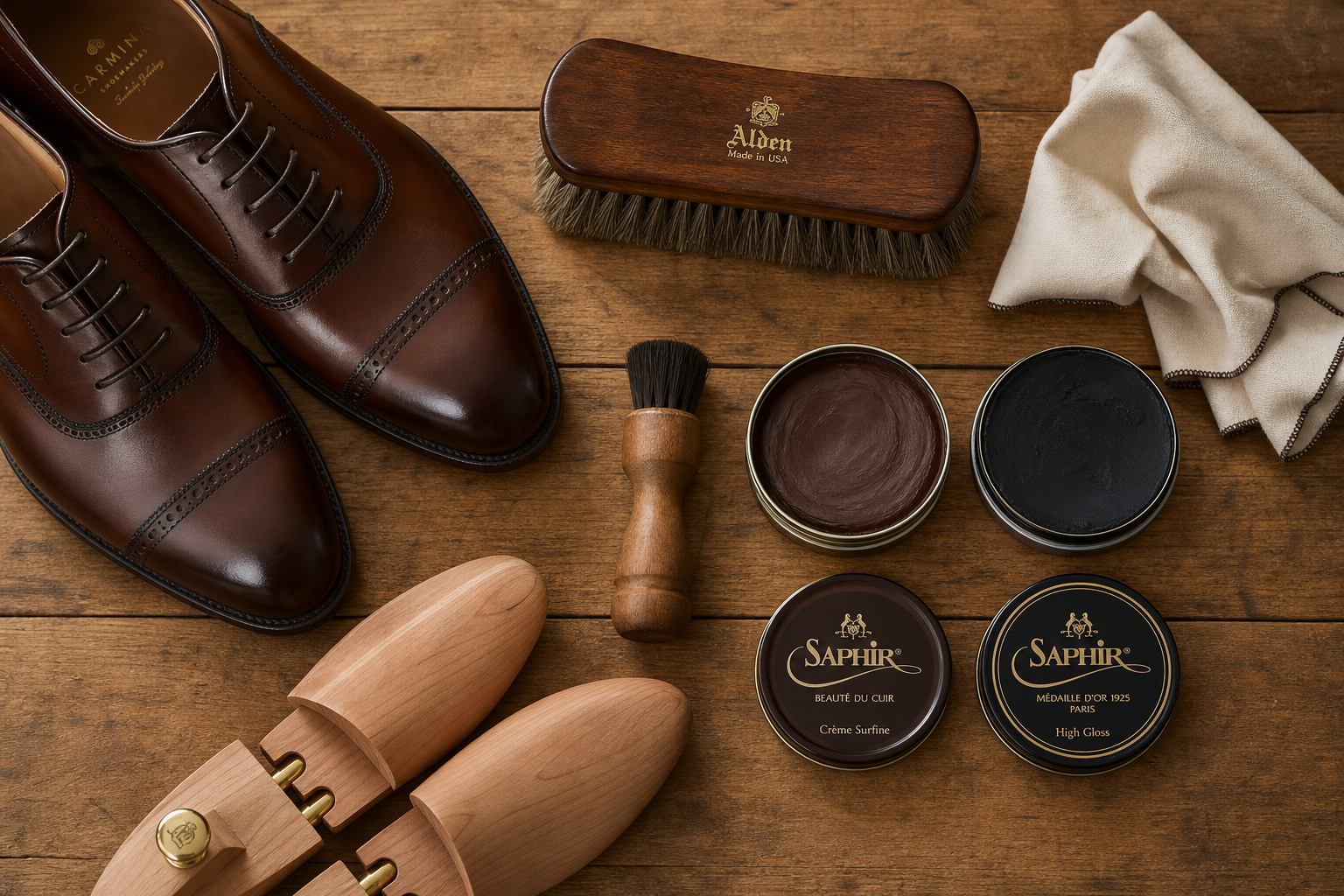
What You Need Before You Start
You do not need a huge kit, but the right tools make a major difference.
Essential shoe polishing supplies
|
Item |
What it does |
Why it matters |
|---|---|---|
|
Horsehair brush |
Removes dust and buffs polish |
Safe on leather and excellent for finishing |
|
Soft cotton cloth |
Applies polish and final shine |
Gives better control for thin layers |
|
Dauber brush |
Applies cream or wax into seams and welt areas |
Useful for detailed, even application |
|
Leather cleaner |
Removes dirt, old residue, and buildup |
Helps polish bond properly |
|
Leather conditioner |
Replenishes oils and softens leather |
Prevents dry, brittle leather |
|
Cream polish |
Restores color and nourishes leather |
Best for routine care |
|
Wax polish |
Builds gloss and adds surface protection |
Best on toe caps and heels |
|
Shoe trees |
Hold shape during care |
Keep the upper smooth and easier to polish |
At Shoe & Boot Accessories 4 U, this is where product choice matters. If you are maintaining calfskin dress shoes, restoring worn boots, touching up faded leather, or caring for multiple colors and finishes, a specialized store helps you match the correct polish type, color, brush, cleaner, and conditioner instead of guessing.
The Best Type of Polish to Use
One of the biggest gaps in many polishing guides is that they talk about “shoe polish” as if it is all the same. It is not.
Cream polish
Cream polish is usually the best starting point for regular care. It adds pigment, helps restore color, nourishes the leather, and gives a soft glow.
Best for:
-
Routine maintenance
-
Dry or slightly faded leather
-
Covering light scuffs
-
Most full-grain smooth leather shoes
Wax polish
Wax polish sits more on the surface. It adds shine and protection but is not as nourishing as cream. It is best used strategically, especially on structured areas like the toe and heel.
Best for:
-
Higher shine
-
Toe caps and heel counters
-
Final finishing layer
-
Added water resistance
Neutral vs colored polish
-
Colored polish helps refresh faded leather and disguise scuffs.
-
Neutral polish adds shine without changing color, but it will not restore pigment.
If color accuracy matters, Shoe & Boot Accessories 4 U offers color charts, trusted professional brands, and product guidance so you can choose the right tone instead of risking mismatched polish on expensive footwear.
Should You Use a Cloth or a Brush?
The short answer: use both, but for different jobs.
Use a cloth when:
-
Applying thin layers with precision
-
Working polish into the leather in small circles
-
Building a refined finish
-
Final buffing with a touch of moisture
Use a brush when:
-
Removing dust before polishing
-
Buffing dried polish quickly and evenly
-
Working around seams, welts, and edges
-
Maintaining several pairs efficiently
Best practice
For most people, the best method is:
-
Brush to clean
-
Cloth to apply cream or wax
-
Brush to buff
-
Cloth to finish
A dauber brush can also be useful for welts and hard-to-reach areas, especially on boots.
How to Prep Leather Before Applying Shoe Polish
Preparation is where better shine begins. If the leather is dusty, oily, or overloaded with old wax, fresh polish will not sit evenly.
Step 1: Remove the laces
Take the laces out first. This gives you better access to the tongue and eyelet area and keeps polish off the laces.
Step 2: Insert shoe trees if possible
Shoe trees smooth the upper and hold the shape of the shoe while you work. This makes brushing and polishing easier and reduces creasing.
Step 3: Dry brush the entire shoe
Use a horsehair brush to remove loose dirt, dust, and debris. Be thorough around the welt, seams, and heel edge.
Step 4: Wipe with a slightly damp cloth or leather cleaner
If the shoes are lightly dirty, a barely damp cloth is enough. If they have buildup, use a proper leather cleaner. This is especially important if the shoe already has layers of old polish.
Step 5: Condition if needed
If the leather looks dry, feels stiff, or has not been conditioned in a while, apply conditioner before polishing. Let it absorb fully before moving on.
A common mistake is polishing over dry leather and expecting the polish itself to fix the problem. Conditioner and polish do different jobs.
Step-by-Step: Best Way to Apply Shoe Polish
This is the practical method that gives the best balance of appearance, protection, and durability.
1. Start with a very small amount of polish
Less is better. You do not want to load the cloth with polish or cake the leather. Wrap a soft cloth around your finger and pick up a small amount.
2. Apply in small circular motions
Work the polish into the leather using light pressure and tight circles. This helps distribute it evenly and avoids streaks.
3. Cover the whole upper with a thin layer
For cream polish, you can apply it over most smooth leather uppers. For wax polish, focus mainly on the toe and heel unless you want a fuller gloss and know how your leather responds.
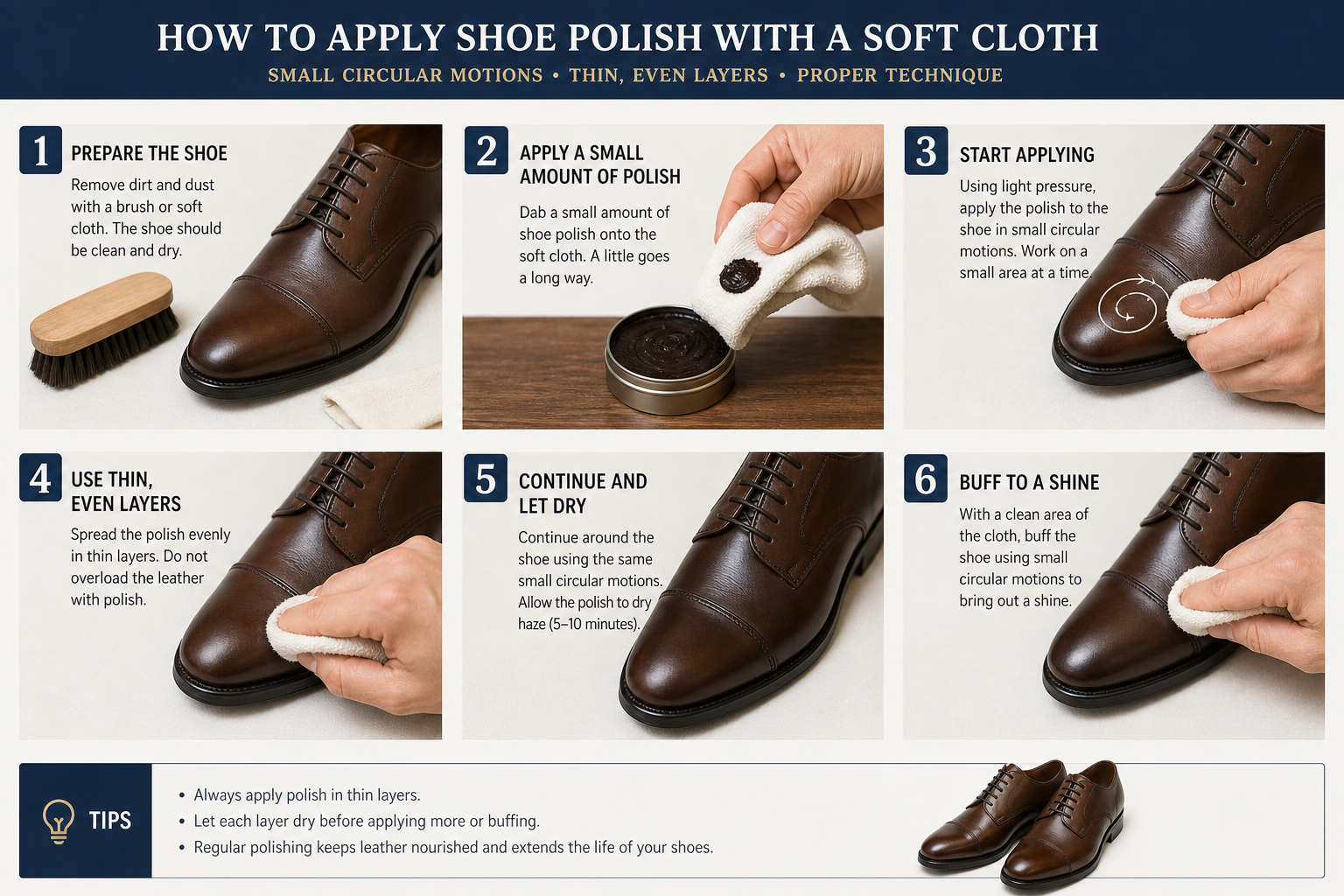
4. Let it dry
Allow the polish to haze or dry before buffing. Cream may only need a few minutes; wax often benefits from a longer wait.
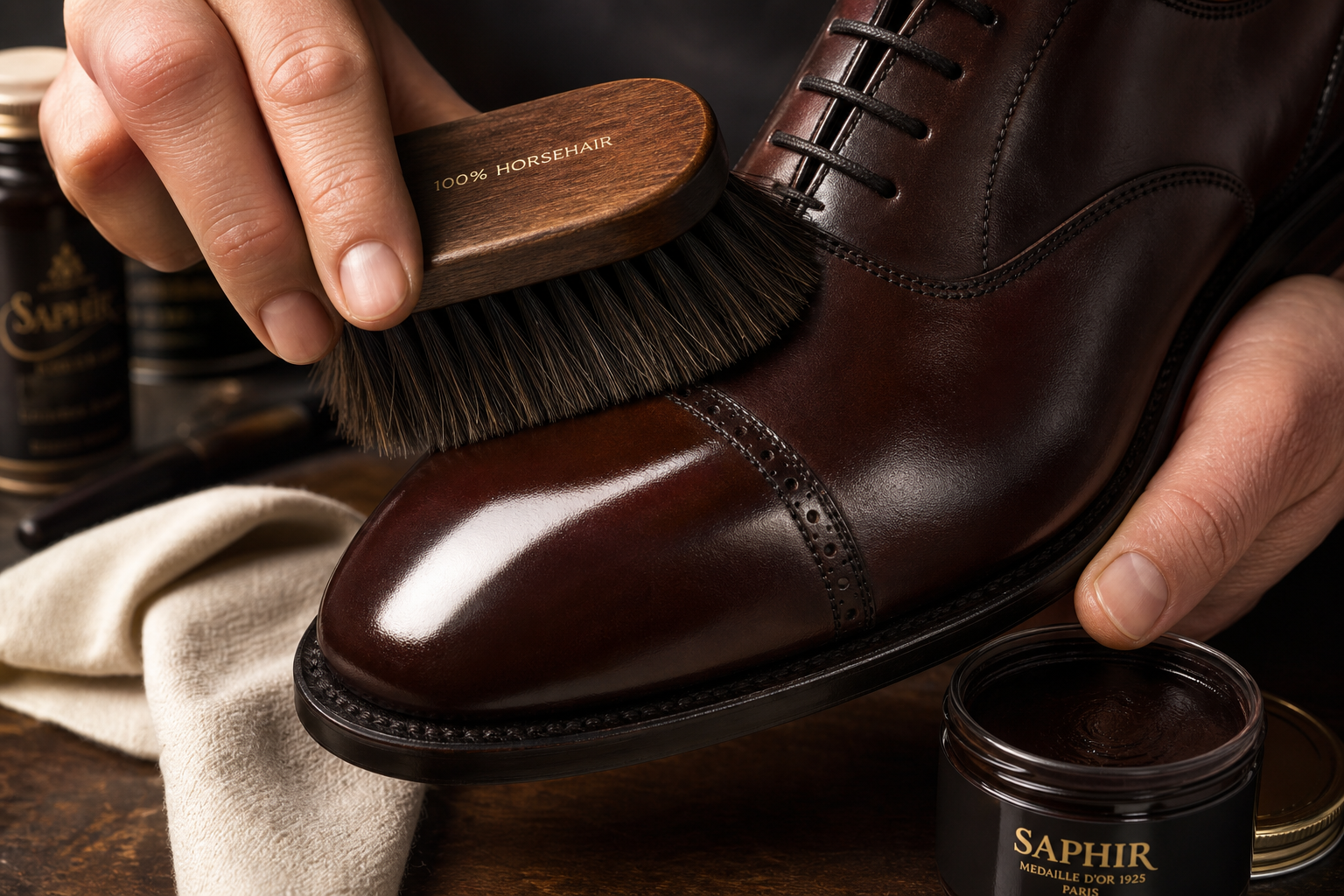
5. Buff with a horsehair brush
Use brisk, light strokes. The goal is not to scrub hard but to warm and level the polish so the shine starts to appear.
6. Add a second light coat if needed
If the leather still looks dull or uneven, repeat with another very thin layer. This is almost always better than applying one thick coat.
7. Finish with a soft cloth
For a brighter finish, use a clean cloth and lightly buff the shoe by hand. This brings clarity to the shine.
How Much Polish Should You Apply?
This is one of the most important answers in the entire guide.
The correct amount
Use a thin, even coat. That is the best way to apply shoe polish.
Too much polish:
-
clogs the leather surface
-
creates streaks
-
causes dull buildup
-
attracts dust
-
makes buffing harder
-
can crack on flex points, especially with wax
Too little polish is easier to fix than too much polish. You can always add another thin coat.
Rule of thumb
If the polish looks thick, wet, or pasty on the shoe, you are probably using too much.
Best Buffing Techniques for Better Shine
Buffing is what transforms a coated shoe into a polished one.
Brush buffing
Use a horsehair brush with quick side-to-side motions. Keep your pressure light. Let the bristles and speed do the work.
Cloth buffing
After brush buffing, use a soft cloth for a more refined finish. This helps remove haze and sharpen the shine.
Layered buffing for better results
The best shine usually comes from repeating this cycle:
-
Thin application
-
Dry time
-
Brush buff
-
Optional second light coat
-
Final cloth buff
Cream Shine vs Wax Shine
Many readers want to know why their shoes look “healthy” after polishing but not especially glossy. Usually, that comes down to whether they used cream only or finished with wax.
|
Finish Type |
Look |
Best Product |
Best Use |
|---|---|---|---|
|
Matte to soft glow |
Natural, rich, conditioned |
Cream polish |
Everyday shoe care |
|
Medium shine |
Neat, dressy, practical |
Cream + buffing |
Office and regular wear |
|
High gloss |
Bright, sharper reflection |
Cream + wax |
Formal shoes, toe caps, heels |
|
Mirror shine |
Reflective “glass” effect |
Multiple wax layers |
Dress shoes, ceremonial use |
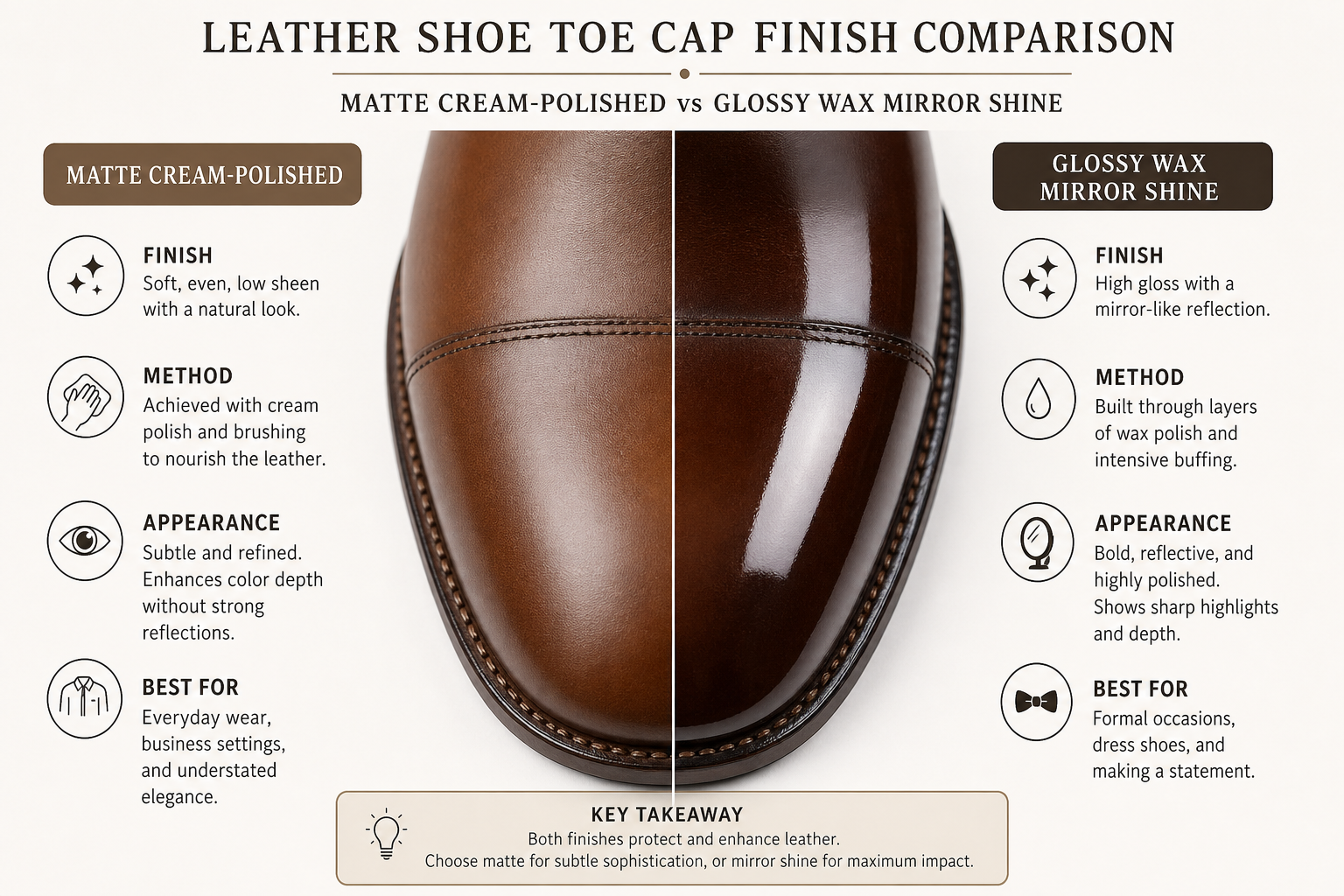
How to Get a Higher Shine Without Overdoing It
If you want more shine, do not jump straight to heavy wax. Build it properly.
Better method for a higher shine
-
Clean the shoe well
-
Condition only when needed
-
Apply cream polish first
-
Buff thoroughly
-
Add a light wax layer to the toe and heel
-
Buff again
-
Repeat with very thin layers
Important tip
Avoid loading wax onto areas that flex a lot, like the vamp. Heavy wax there can crack and turn cloudy over time.
Common Mistakes to Avoid When Polishing Shoes
Competitor articles often cover the basic process, but they often underplay the mistakes that ruin results. These are the ones that matter most.
Using too much polish
This is the most common error. Thick coats do not mean better shine.
Skipping cleaning
Polish needs a clean surface. Dirt trapped under polish leads to dullness and buildup.
Polishing dry leather without conditioning
Polish improves appearance, but it is not a substitute for proper leather nourishment.
Using the wrong color
A poor color match can make scuffs stand out instead of blending in.
Applying wax everywhere
Wax is best used selectively. Heavy application across flex points can cause cracking or haze.
Buffing too soon
If the polish has not dried or hazed, buffing can smear it instead of shining it.
Using household substitutes on valuable shoes
Olive oil, petroleum jelly, toothpaste, and DIY shortcuts are popular online, but they can darken leather, attract dirt, soften finishes unevenly, or create residue problems. For quality footwear, dedicated shoe care products are the safer long-term choice.
How Often Should You Apply Shoe Polish?
How often depends on how often you wear the shoes and what conditions they face.
General maintenance schedule
|
Shoe Type |
Suggested Care Frequency |
|---|---|
|
Frequently worn dress shoes |
Light polish every 2–4 weeks |
|
Occasion shoes |
Polish before wear or every few months |
|
Work boots |
As needed based on wear, dirt, and moisture |
|
Seasonal leather boots |
Clean, condition, and polish before storage and during season |
|
Shoes exposed to rain or city grime |
Clean more often; polish after leather is dry and ready |
Conditioner is usually needed less often than polish. Over-conditioning can be as unhelpful as neglect.
What About Boots, Suede, Nubuck, and Sneakers?
Not all footwear should be polished the same way.
Smooth leather shoes and boots
These are the main candidates for traditional cream and wax polish.
Suede and nubuck
Do not use regular shoe polish. Use dedicated suede or nubuck cleaners, brushes, renovators, and protectors.
Sneakers
Use sneaker-specific cleaners and material-safe solutions depending on whether the upper is leather, mesh, canvas, suede, or synthetic.
Work and heritage boots
These may need heavier-duty conditioners, waterproofing, edge dressing, or leather oils depending on the leather type and intended finish.
This is where Shoe & Boot Accessories 4 U stands out. Instead of offering only generic polish, the store serves customers looking for cleaning, polishing, waterproofing, stretching, restoring, repairing, and comfort solutions across leather, suede, nubuck, and sneaker care, including professional-grade brands used by restorers and repair shops.
When to Use a Brush, Dauber, or Cloth in Your Routine
A simple way to remember it:
|
Tool |
Best Use |
|---|---|
|
Horsehair brush |
Dust removal and buffing |
|
Dauber brush |
Applying polish into welt lines, seams, and detailed areas |
|
Soft cloth |
Controlled application and final shine |
|
Toothbrush-style soft detail brush |
Tight edges and hard-to-reach creases |
If you care for multiple pairs regularly, keeping separate cloths or brushes for black and brown polishes helps prevent color transfer.
A Practical Polishing Routine for Most People
If you want a routine that is simple and repeatable, use this one:
Quick maintenance shine
-
Brush off dust
-
Apply a small amount of cream polish
-
Let dry
-
Buff with horsehair brush
-
Finish with cloth
Better dress-shoe shine
-
Remove laces and insert shoe trees
-
Clean the leather
-
Condition if needed
-
Apply thin cream polish
-
Let dry and buff
-
Apply a light wax coat to toe and heel
-
Let dry and buff again
-
Final cloth finish
Restoration-minded routine
For older or neglected shoes, you may also need:
-
cleaner to remove buildup
-
conditioner to restore flexibility
-
recoloring cream
-
edge dressing
-
protective waterproofing
-
replacement laces
-
shoe trees to reshape the upper
That kind of full-care approach is exactly why many customers choose Shoe & Boot Accessories 4 U. The store is built for both everyday owners and serious DIY repair users, with enough range to support simple maintenance or more advanced restoration.
Final Verdict
The best way to apply shoe polish is simple: start with clean leather, use the right polish for the job, apply thin even coats, let them dry properly, and buff thoroughly with a horsehair brush and soft cloth. For most shoes, cream polish first and wax polish second gives the best combination of nourishment, color, protection, and shine.
If you want better results, the secret is not using more polish. It is using the right products, right tools, and right method.
For that, Shoe & Boot Accessories 4 U is a smart place to start. With a wide selection of specialized shoe and boot care products, trusted heritage and professional brands, solutions for cleaning, polishing, waterproofing, stretching, restoring, repairing, and maintaining comfort, the store helps you care for footwear properly and extend its life with confidence.
FAQ
How to polish shoes extra shiny?
To make shoes extra shiny, start with clean leather, apply a thin coat of cream polish, buff it well, then add a light wax polish mainly to the toe and heel. Build shine in thin layers and buff between coats instead of applying one heavy coat.
How to care for Cole Haan shoes?
For most smooth leather Cole Haan shoes, brush off dust, clean gently, condition when the leather feels dry, and use a matching cream polish for regular maintenance. Always check the material first, since suede, nubuck, knit, and sneaker-style models need material-specific care products instead of standard polish.
How to make your shoe shine like glass?
A glass-like shine comes from applying very thin wax layers to rigid areas like the toe cap, then buffing patiently between coats. Do not overload the leather, and avoid putting heavy wax on flex points where it can crack.
What are some common mistakes to avoid when polishing shoes?
Common mistakes include using too much polish, skipping cleaning, using the wrong color, polishing dry leather without conditioning, and putting wax over the entire shoe. Buffing before the polish dries is another mistake that can leave the finish streaky or dull.
How to make your shoe shine like glass?
To achieve a glass shine, use a proper base of cream polish, then add tiny amounts of wax with a soft cloth in controlled layers. Focus on the toe and heel, let each layer dry, and buff lightly until the surface becomes smooth and reflective.
Is vaseline good to shine shoes?
Vaseline is not the best choice for shining quality leather shoes. It can leave residue, attract dirt, and create an uneven finish, so dedicated shoe creams, waxes, and conditioners are safer and more effective for long-term care.
Recent Posts
-
Best Way to Apply Shoe Polish for Better Shine
Best Way to Apply Shoe Polish for Better Shine A good shine is not just about looks. When you apply …May 08, 2026 -
How to Properly Clean and Maintain Suede Shoes
How to Properly Clean and Maintain Suede ShoesSuede shoes have alw …Nov 16, 2023 -
Expert Tips for Restoring Vintage Shoes to Their Former Glory
Expert Tips for Restoring Vintage Shoes to Their Former GloryVinta …Nov 09, 2023